

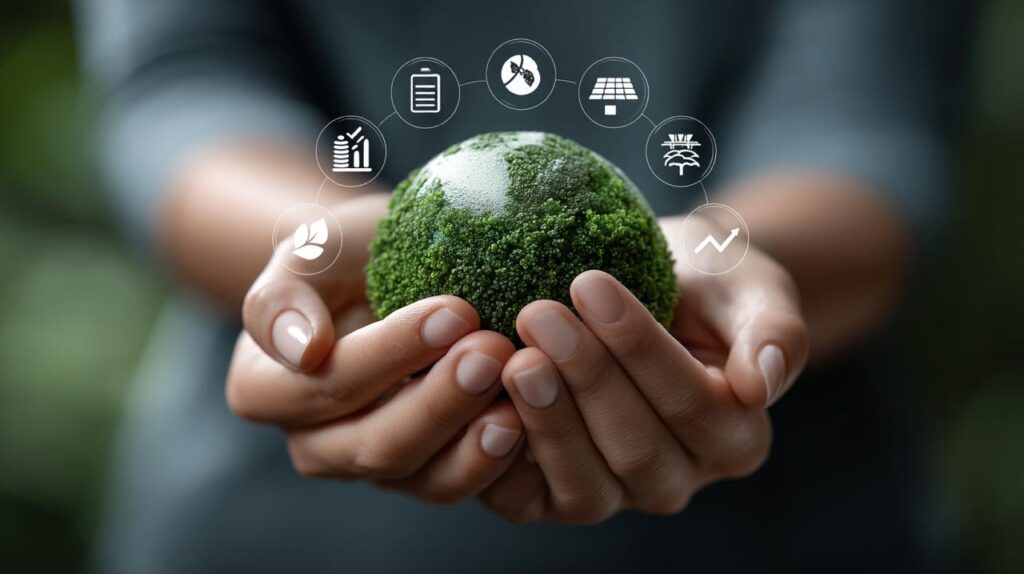
From the broadest perspective, sustaining a resource means not “consuming” it and being able to continue using it. In other words, it is possible to say that natural resources are sustainable as long as they are used efficiently and continue to be transformed into new goods without being wasted. According to this perspective, the more we succeed in transforming resources into new business outputs instead of consuming them and turning them into waste, the more sustainable our future will be.
The business implication of this approach is that in order for companies to adapt to a sustainable world, they need to adopt patterns of use and production systems that enable resources to be renewed or replicated rather than depleted. Accordingly, it should be the most fundamental sustainability responsibility of companies to design solutions that will enable the reuse of resources and repeat this action, and thus to produce in a way that makes it possible for resources to be renewed!
Renewable Industry Integrated with Renewable Energy
In this way, it will be possible to harmonize the business world with the renewable energy cycle that the nature of the world has already been integrated since birth. The new world order, in which the process flows and value chains of the business world are integrated into the renewable energy flows in which nature exists, will bring about a sustainable and renewable industry. In other words, industry will become a direct “stakeholder” of the renewable nature cycle.
Achieving such integrated resource use on a global scale will lead to an optimized and self-renewing network that will use resources in the most efficient way. This will lead to an integrated and circular economy-like value chain. Ultimately, it will be possible to capture in collective form an industrial network that has eliminated waste by increasing its capacity to produce work output from resources, and has integrated the use of renewable resources by making this action repeatable.
Dynamics of the Circular Economy
The components that make up the circular economy,
- maximizing resource efficiency through process optimizations
- best integrate more renewable and renewable energ
- eliminating as much waste as possible and transforming what remains into new business outputs in other forms at the highest possible rates, thereby avoiding the release of any waste
as “industrial symbiosis”
Industrial Symbiosis and Tangle Economy
At this point, an important point to be considered is the implementation of processes that will enable waste to be transformed back into business outputs at other points in a way that will form a chain. In order for this activity, which is defined in the literature as industrial symbiosis, to be carried out repeatedly and recurrently in accordance with the spirit of circular economy, the reuse areas of wastes should be determined in an optimum manner. In other words, the most appropriate alternatives that will convert the job-producing potential of these wastes into output at the highest rate should be carried out together in harmony. At this point, it is useful to keep in mind that the circular economy is actually the management of a tangled web in which multiple cycles are connected in the most rational way at the same time.

